
Why bids come back all over the map
When three demolition quotes for the same space land a long way apart, the usual reason is not that one contractor is cheap and one is expensive. It is that each of them priced a different job, because the tender left the job open to interpretation. The checklist below closes that gap. It is the list we wish every tender came with.
The checklist
- Extent. What comes out, area by area, to what line. "To base building" is a fine phrase if base building is defined: structure, slab, base services to a demarcation, and nothing else.
- Exclusions and protection. Everything that stays — and, for each item, how it is protected, by whom, and who is responsible if it is damaged. This is where selective work is quietly hiding inside "full gut" scopes.
- Service demarcations. For gas, electrical, water, drainage, data, fire alarm and sprinkler: where the isolation point is, who isolates, who confirms, who reinstates. On a full teardown, which utility disconnects are the owner's responsibility and their status.
- Hazardous materials. Whether a survey exists, what it found, whether abatement is complete, and who holds the clearance. If the building predates the mid-1990s and no survey exists, say so — the bids will price the uncertainty instead of guessing.
- Disposal. Whether hauling and tipping fees are inside the price or invoiced afterwards, and whether any material has to go to a specific facility or be diverted from landfill.
- Access and logistics. The route in and out, which elevator, dock bookings, where the bin sits, street-side permits if any, and any site prequalification, orientation or escort requirements.
- Occupancy and hours. Whether the building stays occupied, which areas, and the permitted windows for quiet and for percussive work.
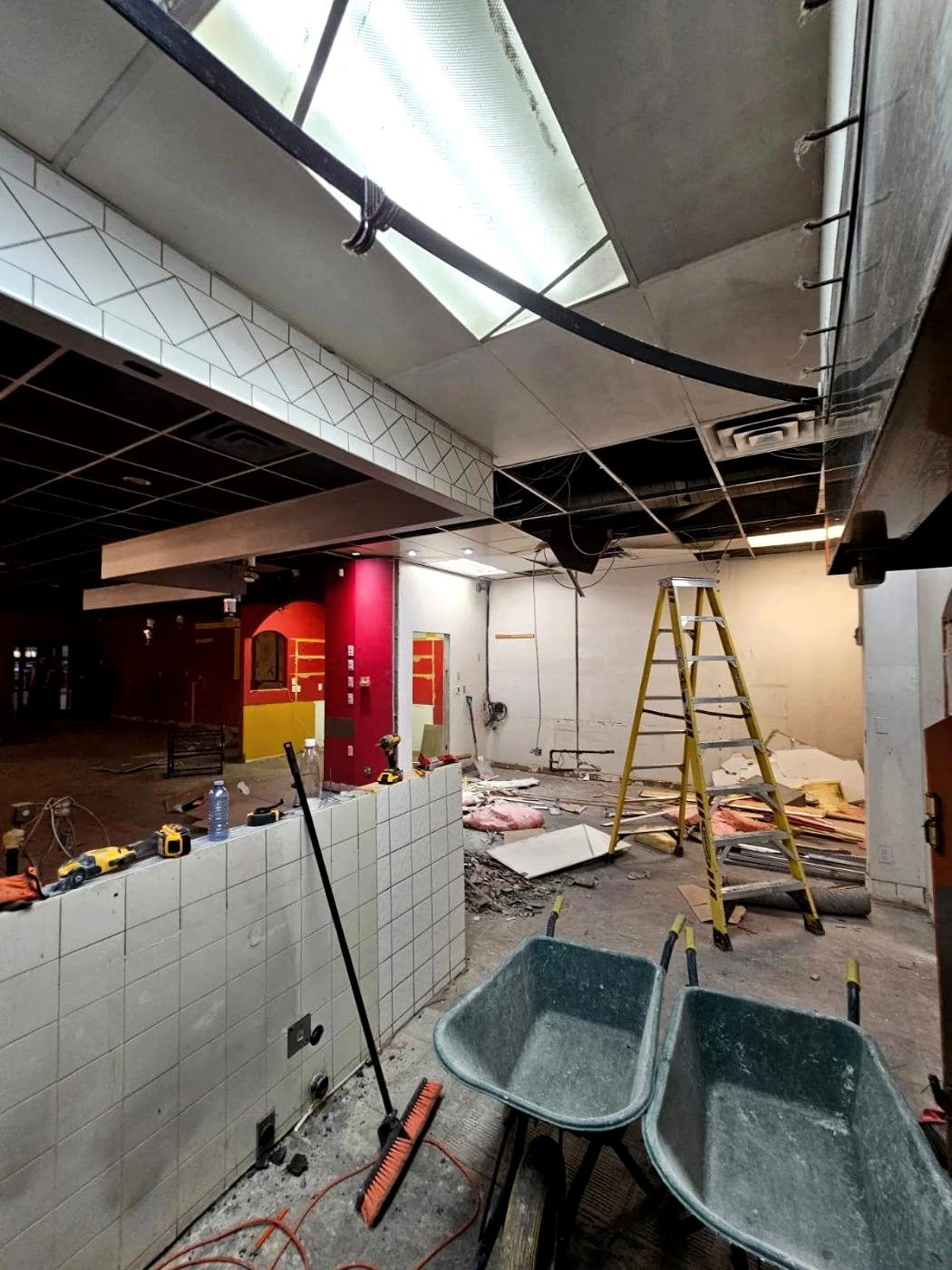
- Handover standard. Define it. Broom-clean means swept, debris out, fasteners pulled or ground flush, protection removed, and the next trade able to start without clearing anything.
- Documentation before mobilization. Liability insurance certificate, WCB clearance, and anything the site or the owner requires. State the required limits if there are any.
- Change mechanism. How discoveries are priced — the wall build-up nobody drew, the live line that was supposed to be dead. Stop, show, price, proceed is the honest version.
Two things to add if the schedule is tight
- The date the space must be handed over, and what happens on the other side of it. A contractor who knows the next trade is waiting will sequence differently.
- Whether a winter start is acceptable. For interior work it should be — it runs the same in any month — and it opens up crews that are genuinely available rather than stretched across three summer jobs.
What we do with a scope like this
We walk it with the person who will run the crew, price it against each line, and give you one firm number with disposal inside it and a date we can hold. Where the scope leaves something open, we say which line, rather than pricing the gap silently and truing it up later.