
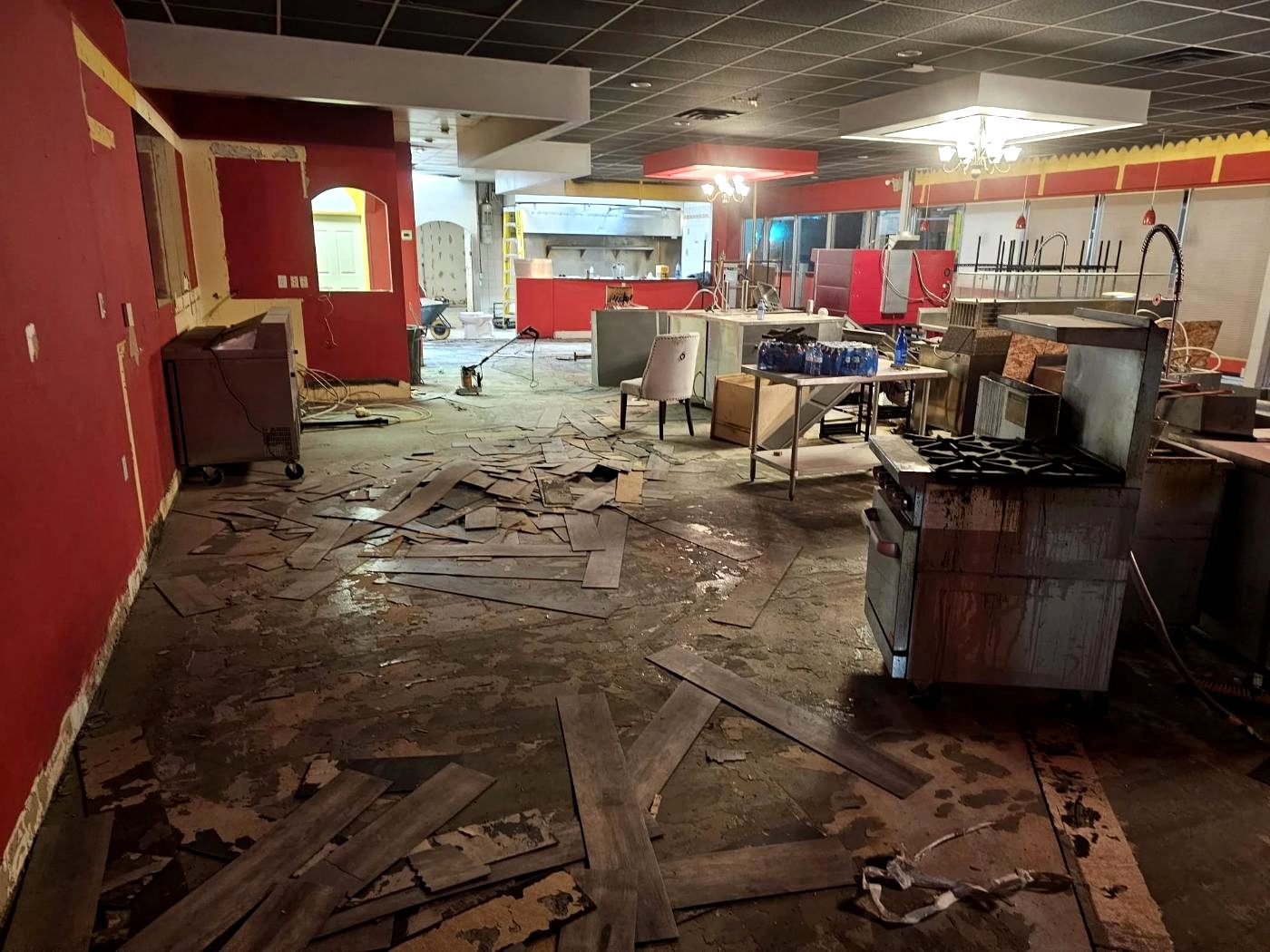
Square footage is the worst predictor
The first question everyone asks is how many square feet. It is close to the least useful number in the estimate. A 2,000 sq ft suite on the eleventh floor of an occupied tower — one service elevator, a booked loading dock, after-hours only, protection on every corridor — routinely takes more crew-hours than a 6,000 sq ft standalone retail unit you can back a trailer up to.
What the estimator is actually measuring is how hard it is to get material out of the building, and how much of the work has to happen around other people.
1. Access
Ground-floor with a loading door is the cheapest case. Every constraint added — stairs, an elevator, a shared dock, a permit for a street-side bin, a narrow lane — adds handling. Material gets touched more times, and every touch is time.
2. What the building is made of
Steel stud and drywall comes down fast. Concrete block, cast-in-place, terrazzo, thick-set tile beds and structural slab all come down slowly and generate heavy, expensive-to-haul debris. On older buildings the wall build-up is often unknown until the first opening is cut, which is why an experienced estimator will price a range where a drawing does not exist.
3. Hazardous materials
Anything built before the mid-1990s should be assessed for asbestos before demolition — Alberta OHS requires asbestos-containing materials with the potential to release fibres be dealt with first. Lead paint and mould can appear too. This is usually the single biggest schedule variable on an older building, because abatement has to complete and clear before demolition starts.
To be clear about what we are: Zebra Demolition is not an asbestos abatement contractor. Where an assessment finds asbestos, a qualified abatement contractor does that work and we schedule behind their clearance.
4. Services
Live power, gas, water, sprinkler and data have to be isolated to a defined demarcation before anything is cut. On a full building teardown, utility disconnects are the most common cause of a slipped date — the ATCO Gas primary line cutback in particular runs on the utility's calendar, not yours, and it should be started far earlier than feels necessary.
5. Disposal
Haul distance and tipping cost are a real line in any honest quote. Heavy material — concrete, block, tile beds — costs more to move than light material of the same volume. On a regional job, where the material can legally go changes what the job costs to run. We build hauling and dump fees into the quote rather than invoicing them afterwards, which means they get scoped properly on site instead of guessed.
6. Occupancy
A vacant building is the cheapest building to work in. Every tenant who stays adds dust barriers, protected routes, noise windows, daily clean-down and often after-hours premium time. It is entirely worth it when the alternative is losing rent — but it is a real cost and it belongs in the conversation up front, not as a change order.
7. Schedule compression
A scope that comfortably takes two weeks can be done in one, with more crew. That is a legitimate thing to buy and we would rather quote it honestly than pretend the two are the same number. Conversely, a flexible date is worth money to you, because it lets the work slot into a mobilization that is already happening nearby.
Why we do not publish prices
Because a per-square-foot figure for demolition is close to meaningless, and any contractor quoting one over the phone is either guessing or planning to true it up later with extras. Every scope gets walked on site by the person who runs the crew, and you get one firm number with disposal already inside it.