Licensed & InsuredWCB CoverageDisposal IncludedReady to Mobilize
Core Service Area
Working in Fort Saskatchewan.
Fort Saskatchewan is inside our core service area, so crews go out the same week. We are resourced for scopes with real duration — whole floors, whole buildings and multi-building programs — which is where a full crew is genuinely cheaper to work with than an outfit dipping in and out between other jobs.
Every scope is quoted on site, and hauling and dump fees are inside that number — no separate disposal invoice afterwards, broom-clean and trade-ready at handover. Crews and equipment are staged and ready to mobilize, winter included.
The two things that actually decide how a demolition here runs — who issues the permit, and what you are pulling apart.
Permit Authority
City of Fort Saskatchewan
Fort Saskatchewan issues its own permits. Work on or near sites connected to Alberta's Industrial Heartland usually carries a second layer on top of the municipal permit — contractor prequalification, site-specific safety orientation and controlled access. Those are a scheduling input to plan around, not paperwork to deal with on the morning of day one.
What Generates the Work
Commercial Stock in Fort Saskatchewan
Fort Saskatchewan sits at the edge of Alberta's Industrial Heartland, which is what makes the scopes here large. Alongside retail and office turnover in town, there is a steady supply of shop, warehouse and support-building work: office and lunchroom areas stripped out of operating industrial buildings, mezzanines removed, process areas cleared, and concrete pads taken out. Much of it has to happen without stopping the operational side of the building.
Permit requirements change. Treat this as a starting point for the conversation, not legal advice — we confirm the current process with the authority as part of the on-site estimate.
What We Do Here
Commercial Demolition Services in Fort Saskatchewan
Every scope below is quoted on site by the person who runs the crew. Hauling and tipping fees are inside that number, and the space is handed over broom-clean and trade-ready.
Proximity to the Industrial Heartland means most of the work is inside operating industrial buildings, phased around the side that keeps running. Office and lunchroom fit-out out to the structural envelope, mezzanines and platforms dismantled with the load path planned before the first cut, racking bases and floor anchors out of the slab, redundant process equipment and housekeeping pads removed, yards and laydown areas cleared. Manufacturing plants, warehouses, oilfield-service shops and logistics buildings.
Interior Strip-OutsWhole floors and whole units taken back to base building.
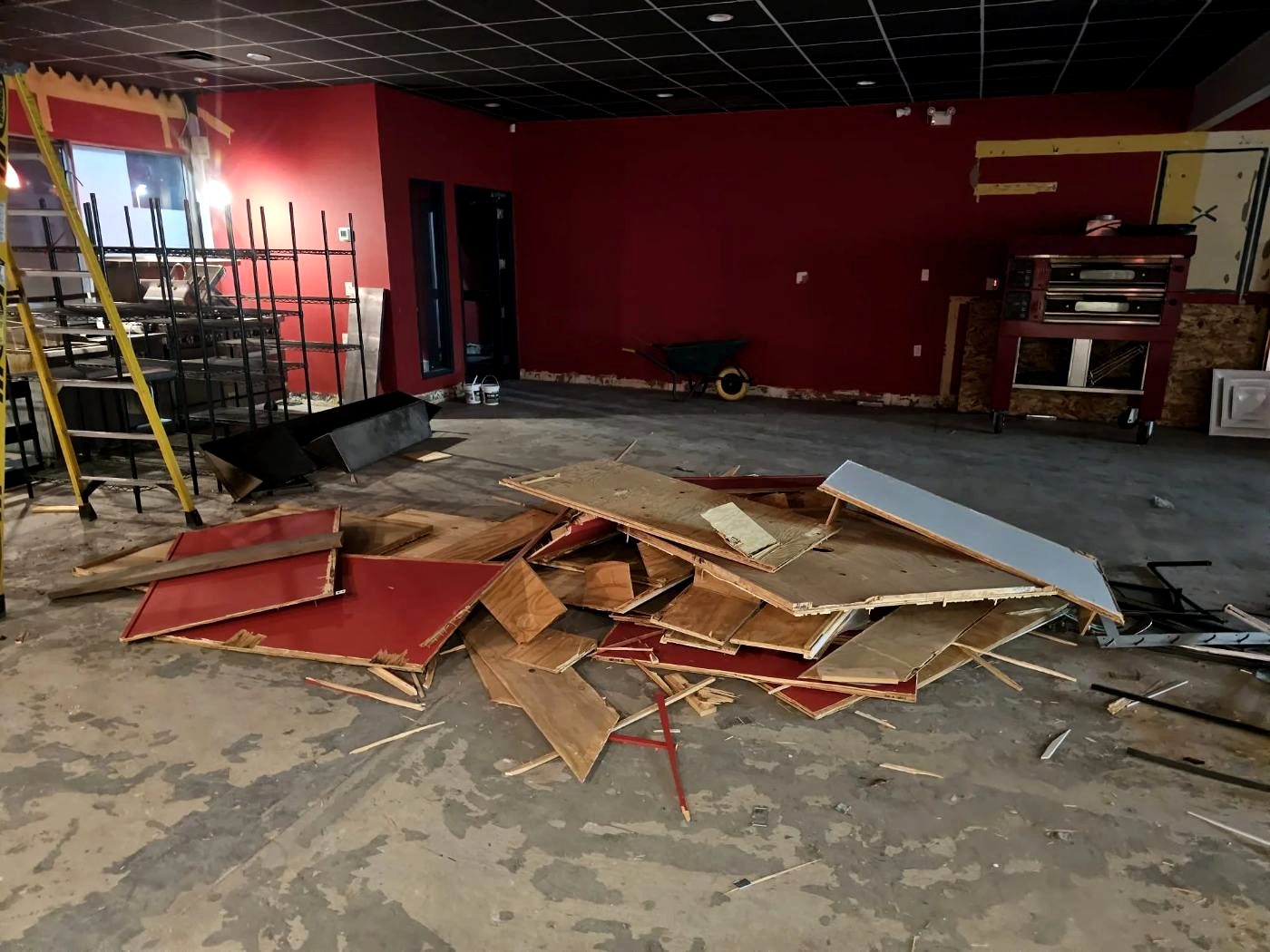
Partitions, drywall and furring, T-bar and drywall ceilings, flooring down to the slab, millwork, casework and fixtures, and the redundant mechanical and electrical hung off them — removed to the demarcation your consultants set. Offices and office towers, retail units and strip malls, restaurants and commercial kitchens, and the built-out office areas inside industrial buildings.
Permit path, hazardous materials clearance and utility disconnects at the front end; then the structure down, foundations and slab out rather than buried, backfilling and site grading to what the next phase needs. Multi-building sites come down in one mobilization and one sequence.
Suite gut-outs back to studs and slab, unit by unit or block by block against your turnover calendar, with corridors, elevators, lobbies and occupied suites protected throughout. Daily clean-down, agreed working hours, and insurance and WCB documentation on file before we mobilize.
Selective DemolitionStructure-sensitive removal, judged on what is still standing.
New openings cut in existing walls and slabs to your engineer's sequence and temporary support, partial removals of one wing, floor or elevation while the rest of the building stays in use, and careful work in older buildings where what stays cannot be replaced. Live services isolated and confirmed dead before anything is cut.
Several buildings on one site taken down in one sequence, foundations and slabs out and hauled, land clearing and yard clear-down, and full debris management with every load and every tipping fee inside the quote. Site left levelled and ready for survey, layout or re-lease.
Yes — phased, occupied-site work is our core competence. We isolate the work zone, run dust and noise control, and sequence around the operating side of the building, including off-hours where the site requires it.
Can you meet contractor prequalification?
We carry liability insurance and WCB coverage and can provide documentation before we mobilize. Site-specific orientation requirements vary by owner — tell us what the site expects and we will confirm what we can meet before you commit us to a date.
Do you take winter turnaround work?
Yes. Winter is when we have the most crew available, because the landscaping side of the business is out of season and the same people and equipment move onto demolition.
Is disposal included?
Yes. Hauling and dump fees are built into the quote, so there is no separate disposal invoice landing after the job.
How is asbestos handled?
Alberta OHS regulations require asbestos-containing materials with the potential to release fibres be dealt with before demolition, so anything built before the mid-1990s should be assessed. Zebra Demolition is not an asbestos abatement contractor — where an assessment finds asbestos, a qualified abatement contractor handles it and we schedule behind their clearance.
Nearby
Also Working In
Sites in more than one of these? Bundling them into a single mobilization is almost always the cheaper way to run it.